
Understanding the underpinning cost involved in stabilising a property is essential if you’re dealing with subsidence or foundation movement. From hairline cracks that keep reappearing to doors and windows that no longer sit square, these warning signs often raise the same concern: how much does it cost to underpin a house in the UK?
Underpinning is a major structural intervention, and the cost of underpinning a house can feel daunting without clear guidance. Costs have continued to evolve due to material prices, labour availability and tighter building control standards. Labour costs are a significant part of underpinning expenses and can vary depending on the scope of work and any additional professional services required, such as inspections and permits. This guide builds on earlier advice and reflects what homeowners should realistically expect in 2026.
At Zapperty, we regularly speak to homeowners weighing the costs of underpinning against the option of selling a property as it is. This article is designed to help you understand both sides clearly.
In this article, we’re going to discuss how to:
- Recognise when underpinning may be required
- Understand underpinning costs in the UK and what influences them, including how property size can impact the extent and cost of underpinning work
- Decide whether underpinning or selling could be the better option
We’ll also explain how you can sell your house fast with Zapperty.
What underpinning involves and why properties need it
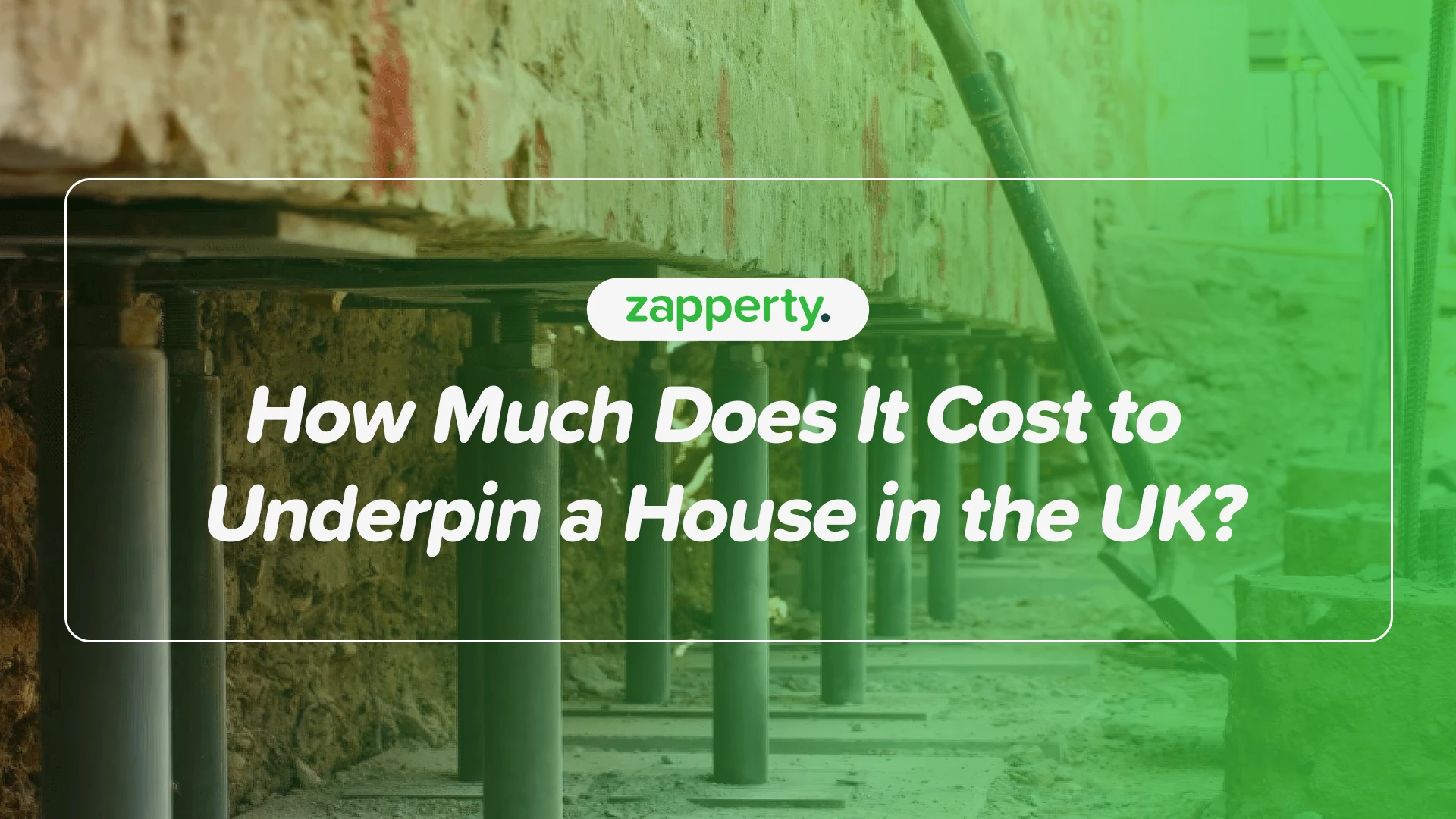
Underpinning is a construction method used to strengthen the foundations of an existing building when the original foundations no longer provide adequate support. Properties experiencing subsidence or structural weaknesses may require underpinning to restore stability. In most cases, underpinning is linked to subsidence, but it can also be required when a property undergoes structural changes or when the ground conditions beneath it change over time.
Typical reasons homeowners face underpinning work
Several underlying issues can lead to the need for underpinning, and identifying the root cause is crucial before any work begins.
- Subsidence caused by ground movement or soil shrinkage
- Soil erosion linked to drainage problems or leaking pipes
- Tree root activity drawing moisture from clay soils
- Inadequate foundations from the original build
Underpinning is frequently required when these types of foundation problems are identified.
These issues often develop slowly, which is why many homeowners only discover them once visible damage appears.
Warning signs that suggest underpinning may be necessary
Not every crack means a house needs underpinning, but certain indicators should never be ignored. These warning signs often indicate underpinning needed to address underlying structural issues. Repeated or worsening symptoms usually prompt a structural assessment.
- Cracks appearing both internally and externally, particularly around doors and windows
- Doors and windows sticking or no longer closing properly
- Sloping or uneven floors
- Gaps forming between walls, ceilings or external brickwork
If these signs are present, a structural engineer should be consulted before any assumptions about underpinning costs are made.
What causes subsidence?
Subsidence is a complex problem that can undermine the structural integrity of a building, and it often stems from a combination of natural and man-made factors. One of the most common causes is the shrinkage or settlement of the soil beneath a property’s foundation, particularly in areas with clay-rich soils that expand and contract with changes in moisture. Extended periods of drought or heavy rainfall can accelerate this process, leading to instability in the building’s original foundation. Tree roots are another frequent culprit; as trees and large shrubs draw water from the soil, they can cause the ground to dry out and shrink, especially if they are planted too close to the house. Poorly designed or shallow foundations, leaking drains, and nearby construction work can also contribute to subsidence by disturbing the soil or altering drainage patterns. If you notice signs of movement, it’s essential to consult a structural engineer, who can assess the underlying causes and recommend the most suitable underpinning method to restore stability and prevent further damage.
Preventing subsidence: steps to protect your property
Taking proactive steps to prevent subsidence can save homeowners significant time, money and stress in the long run. One of the most effective measures is to manage the vegetation around your property. Keeping trees, large shrubs and other deep-rooted plants at a safe distance from the building can help prevent their roots from drawing excessive moisture from the soil beneath your foundations.
Regularly inspecting your property for early signs of movement, such as small cracks or sticking doors, allows you to address issues before they escalate. Promptly repairing leaking pipes or drainage systems is also crucial, as water damage can erode soil and weaken existing footings. For properties at higher risk, a building contractor or specialist underpinning contractor may recommend preventative solutions such as installing root barriers to block invasive tree roots or using screw piles to provide additional support to the foundation.
By working with experienced professionals and staying vigilant, you can reduce the likelihood of needing extensive underpinning work in the future and keep your building structurally sound.
Average underpinning cost in the UK for 2026
The cost of underpinning a house in the UK varies widely depending on the method used, the severity of the issue and the size of the affected area. As of 2026, most homeowners can expect underpinning costs to fall between £6,000 and £25,000, although complex cases can exceed this. The total cost of underpinning a house includes not only the construction work but also professional fees, surveys and any necessary remedial work.
Underpinning varies significantly in cost depending on the method used, property characteristics and site conditions.
Typical underpinning costs by method
Different underpinning techniques suit different ground conditions and structural problems. Each comes with its own cost profile, usually calculated per square metre for clear comparison:
- Mass concrete underpinning usually costs around £1,500 per square metre
- Beam and base underpinning typically costs approximately £2,000 per square metre
- Piling underpinning can reach £2,600 per square metre or more
- Resin injection underpinning costs around £1,200 per square metre and is often quicker and less disruptive
These figures represent the underpinning cost itself and do not always include professional fees or remedial work.
Why underpinning costs can vary so much
Two properties on the same street can face very different underpinning costs. Soil conditions, access restrictions and the depth required to reach stable ground all influence how much it costs to underpin a house.
Understanding this variation helps explain why online averages rarely match final quotations. Other factors, such as project timescale, level of disruption and regulatory requirements, can also impact the final underpinning cost.
A closer look at underpinning methods and suitability
Choosing the right underpinning solution is just as important as understanding the cost of underpinning a house. The effectiveness of foundation work depends on selecting the most appropriate underpinning method for the specific property. A method that works well for one property may be unsuitable for another.
Mass concrete underpinning
This is one of the oldest and most widely used methods, known as traditional mass concrete underpinning.
The traditional mass concrete method involves excavating sections beneath the existing foundation and filling them with concrete in controlled stages, creating a new, deeper foundation. This approach is particularly cost-effective and suitable for shallow foundations. Compared to more advanced techniques, the mass concrete method is effective in load dispersion and often offers cost advantages, though it can be labour-intensive and disruptive, which contributes to higher overall underpinning costs in built-up areas.
Beam and base underpinning
This technique, known as the ‘beam and base method’, spreads the load of the structure using reinforced concrete beams supported by concrete bases.
The base method involves creating concrete bases beneath the wall and supporting them with beams to distribute the load evenly. This method provides more stability compared to traditional underpinning techniques, especially for fragile walls.
It’s often used where walls are fragile or where load distribution needs to be carefully managed. While effective, it requires precise engineering design and skilled installation.
Piling underpinning
Piling underpinning is a type of deep foundation method used to transfer loads to deeper, more stable soil layers.
Steel or concrete piles are driven into the ground, making this method suitable for poor soil conditions. The specialist equipment involved means the underpinning house cost is usually higher.
Resin injection underpinning
Resin injection is a modern alternative that has gained popularity due to its speed and minimal disruption.
Expanding resin is injected into the ground to stabilise the soil and lift the foundation if necessary. Resin injection underpinning cost is generally lower than traditional methods, but it’s not suitable for all types of subsidence or severe structural movement.
First excavation and trenching: the initial steps
The underpinning process begins with the first excavation and trenching, which are essential for exposing the existing foundation and preparing the site for structural improvements. During this stage, trenches are carefully dug around the affected areas of the property, allowing access to the original foundations and making space for new support systems, such as mass concrete or beam and base installations. The depth and width of these trenches will vary depending on the underpinning method chosen, the type of soil and any obstacles encountered during the work. A structural engineer typically oversees this phase to ensure that the excavation is carried out safely and that the building remains stable throughout the process.
The cost of excavation and trenching can range from £75 to £150 per linear metre, depending on the complexity and scale of the underpinning work required. While this stage can be labour-intensive and disruptive, it is a critical step in ensuring the long-term stability and safety of your property.
Extra costs that often catch homeowners out
When calculating how much underpinning costs in total, it’s important to factor in expenses beyond the construction work itself.
Professional and regulatory costs can significantly affect the final bill.
- Structural engineer assessments often cost between £500 and £1,000
- Building control fees typically range from £150 to £250
- Party wall agreements may cost £400 to £1,000 per neighbour
- Remedial works such as plastering, redecorating or landscaping can add several thousand pounds
Advanced underpinning methods, such as the use of concrete beams or other robust foundation reinforcement techniques, can result in increased costs compared to basic approaches. Unexpected site conditions can also contribute to higher expenses.
These additional costs mean the true cost of underpinning a house is often higher than initial estimates suggest. Without detailed quotations and clear contracts, homeowners may also face cost overruns during underpinning projects.
Factors that influence the total underpinning cost
While average figures provide a useful reference point, several practical factors determine how much to underpin a house in reality.
Property location plays a major role, as labour and access costs tend to be higher in cities and densely populated areas. Soil type is another key variable, particularly in clay-heavy regions where deeper solutions are often required.
Ease of access also matters. Restricted sites can increase labour time and machinery costs, pushing underpinning costs higher than expected. If you need to underpin the whole house, rather than just a single wall or section, the overall cost will be significantly higher due to the increased scope of work, including additional structural engineer fees and planning permissions.
Building regulations and underpinning: what you need to know
Complying with building regulations is a vital part of any underpinning project, ensuring that all work is carried out safely and meets the required standards. Before starting any underpinning work, you must notify your local building control office, which will review your plans and may require inspections at various stages of the underpinning process. If your property shares a wall with a neighbour, a party wall agreement may also be necessary to protect both parties’ interests and avoid disputes.
A qualified structural engineer will typically be involved to design the underpinning solution and ensure it meets all regulatory requirements. The cost of meeting building regulations can vary depending on the complexity of the underpinning work and the specific demands of your local authority, but failing to comply can result in significant penalties, costly remedial work or even legal action. By working closely with a reputable building contractor and ensuring all documentation is in order, you can be confident that your underpinning project will be completed safely, legally and to a high standard.
What the underpinning process typically involves
Understanding the process helps homeowners plan for disruption and timelines.
The following steps are typically involved in an underpinning project. The process usually starts with an inspection by a structural engineer, followed by detailed site investigations and design work. Permissions and approvals are then secured before construction begins. Work is often completed in stages, with inspections at each phase to ensure compliance with safety standards.
Depending on complexity, underpinning can take several weeks or sometimes longer if unexpected ground conditions are uncovered.
Insurance and underpinning costs
Many homeowners hope their insurance will cover underpinning costs, but this depends on the cause of the damage and policy terms. It’s important to consult your insurance provider to understand exactly what is covered regarding underpinning work.
A home insurance policy may cover some underpinning costs, especially if subsidence occurs during the period of insurance cover, but coverage varies by provider and policy terms. Insurers may fund investigations and repairs; however, pre-existing issues, poor maintenance or preventative underpinning are often excluded.
Even when house insurance applies, future premiums may increase and some insurers may be reluctant to offer cover once underpinning has been carried out.
Choosing a contractor you can trust
The quality of the contractor directly affects both safety and cost control.
It’s highly recommended to seek out specialist underpinning contractors with proven expertise, technical qualifications and appropriate accreditations. Look for specialists with proven underpinning experience, appropriate accreditations and clear insurance cover. Transparent, itemised quotes help avoid disputes later and provide clarity on what the underpinning cost actually includes.
Do you always need to underpin before selling a property?
Many homeowners assume underpinning is unavoidable before selling, but that isn’t always the case.
Potential buyers may be cautious about properties with foundation issues or previous underpinning work, as these concerns can affect the marketability and sale prospects of the property.
Mortgage buyers are often cautious, and lenders may insist on underpinning before approving a loan. Cash buyers, however, are usually more flexible.
Selling without underpinning
Underpinning is expensive and disruptive, and in some cases, selling without repairs makes more financial sense.
Cash buyers like Zapperty can purchase properties with structural issues, removing the need to pay upfront underpinning costs or manage lengthy building work.
For more information, read our guide on what not to fix when selling a house in the UK.
Selling quickly without the cost of underpinning
Zapperty helps homeowners move on without the burden of major repairs.
- Sell in as little as 7 days
- No need to underpin or fix structural problems
- No estate agent or solicitor fees
- No obligation cash offer within 60 minutes
If underpinning costs feel overwhelming, selling as is can provide certainty and speed.
Key takeaways before you decide
- Underpinning costs vary widely and depend on method, soil and access
- The true cost of underpinning a house often includes professional and remedial expenses
- Selling without underpinning can be a practical alternative for some homeowners
If you’re weighing up your next step, speaking to both a structural professional and a specialist buyer can help you make an informed decision.
Ready to move forward? Whether you’re exploring underpinning options or looking for a fast sale without repairs, Zapperty is here to help. Contact us today to discover more about selling your property without underpinning.
FAQ about underpinning costs and selling
How much does it cost to underpin a house in the UK in 2026?
Most underpinning costs in the UK range from £6,000 to £25,000, depending on the method used, the extent of damage and site conditions.
Is resin injection underpinning cheaper than traditional methods?
Resin injection underpinning cost is usually lower than mass concrete or piling, but it’s only suitable for certain types of subsidence and ground conditions.
Does underpinning increase a property’s value?
Underpinning can stabilise a property and reassure buyers, but it doesn’t always increase value enough to offset the full underpinning cost.
Can you sell a house with subsidence without underpinning it?
Yes, especially to cash buyers. While mortgage buyers may be restricted, cash buyers can often proceed without repairs.
Is underpinning always the best solution?
Not always. In some cases, monitoring, alternative repairs or selling the property may be more appropriate than full underpinning.