Selling a buy-to-let property in the UK is rarely simple. If ever. There are so many variables – some big, some small – that add little complexities and mean a one-size-fits-all process is impossible. As a landlord, one of the biggest decisions you’ll face is whether to sell with tenants still in place (known as ‘tenants in situ’) or to sell the property vacant. Both routes have financial, legal and practical implications, and the right choice will depend on your current situation and your goals.
In this guide, we’ll cover everything you need to know, including how:
- Selling a buy-to-let property involves deciding between selling with tenants in situ or vacant, each choice impacting financial, legal and practical aspects.
- Identifying your selling motivation, whether it’s quick cash flow or maximising sale price, is crucial in determining the best approach.
- Clear communication with tenants and understanding your goals helps navigate the selling process effectively.
- You can sell your house fast with Zapperty.
Why Are You Selling Your Property?
Before deciding how to sell, it’s important to step back and think about why you’re selling. Landlords choose to exit for various reasons, including tighter regulations, rising costs, releasing capital for other investments or simply reducing their portfolio size.
If your priority is speed, keeping tenants in place may appeal to investors looking for ready-made income. If your goal is to maximise the sale price, securing vacant possession might be the better route. Outlining your motivation right at the start of the process will help you decide the most profitable and practical way forward.
The Pros of Selling with Tenants in Situ
Keeping tenants in place while selling has some pretty obvious advantages. You’ll continue to receive rental income right up until completion, ensuring cash flow doesn’t dry up during the selling process. Many investors see a tenanted property as a strong opportunity, offering immediate returns without the hassle of finding new renters.
There’s also no need to refurbish or stage the property, as the appeal is based on its income potential rather than presentation. Of course, the property needs to be well-maintained and not in need of major work, as buyers won’t want to spend a fortune should the current tenants move out in the future. In some cases, tenants themselves may even be interested in buying the property themselves, offering a smooth and direct route to sale and far less risk as there is no chain.
The Cons of Selling with Tenants in Situ
Selling with tenants isn’t always perfect and does come with limitations. The buyer pool is smaller, as many residential buyers will only consider vacant homes. It all depends on what the buyer is looking for, of course. But this reduced demand can mean you need to be prepared to sell for less compared to an empty property on the open market.
Practical issues can also crop up. Viewings may be difficult if tenants refuse access or fail to present the home well. On top of that, legal restrictions, such as Section 21 changes and ongoing reforms under the Renters’ Reform Bill, can complicate things, leaving landlords with fewer options to regain possession if needed.
Read our article featuring expert tips for selling a property with tenants in situ.
The Benefits of Selling Vacant Possession
Selling an empty property will usually give you access to a much wider pool of buyers, as both families and investors are more likely to consider the purchase. And as there’s more demand, the competition can potentially drive up offers and secure you a higher sale price.
Vacant properties also provide the chance to refurbish, repaint or stage the home to maximise value. Viewings are easier to arrange, and the transaction can move faster without relying on tenant cooperation.
The Challenges of Selling Vacant Possession
Of course, selling a vacant property still has its fair share of drawbacks. Once tenants move out, you’ll lose rental income and still face ongoing expenses like mortgage payments, council tax and utilities, which could stretch for months if the property struggles to sell. An empty property can also be at risk of damp, damage or even break-ins if left unoccupied for long periods.
There’s also the cost of preparing the property for sale. Refurbishing, cleaning and maintaining an empty house adds to your outgoings at a time when no rent is coming in.
Key Financial Considerations
The decision between selling with tenants or vacant usually comes down to your bottom line. Selling with tenants allows you to continue bringing in income through rent until completion, but investors will often calculate offers based on strict yield targets, potentially lowering the price they’re willing to pay.
Selling vacant usually ensures a higher sale price, but it’s about striking a very fine balance between the costs of void periods, legal fees and any refurbishments. Tax implications, such as Capital Gains Tax and Stamp Duty Land Tax when selling multiple properties, also need to be factored into your overall return.
For more information, read our article on how to sell a property with tenants in situ.
Off-Market and Specialist Routes
Some landlords go for specialist approaches to speed up the process. Selling directly to investors or as part of a portfolio can provide certainty, but usually at a discount. Off-market sales offer discretion without public advertising, though this limits the buyer pool even further.
Zapperty provides a flexible, no-hassle solution, whether your property is tenanted or vacant. We buy homes directly, offering fair prices, guaranteed completions and no hidden costs. With us, you avoid the headaches of viewings, voids and legal complexities.
Making the Right Choice for Your Bottom Line
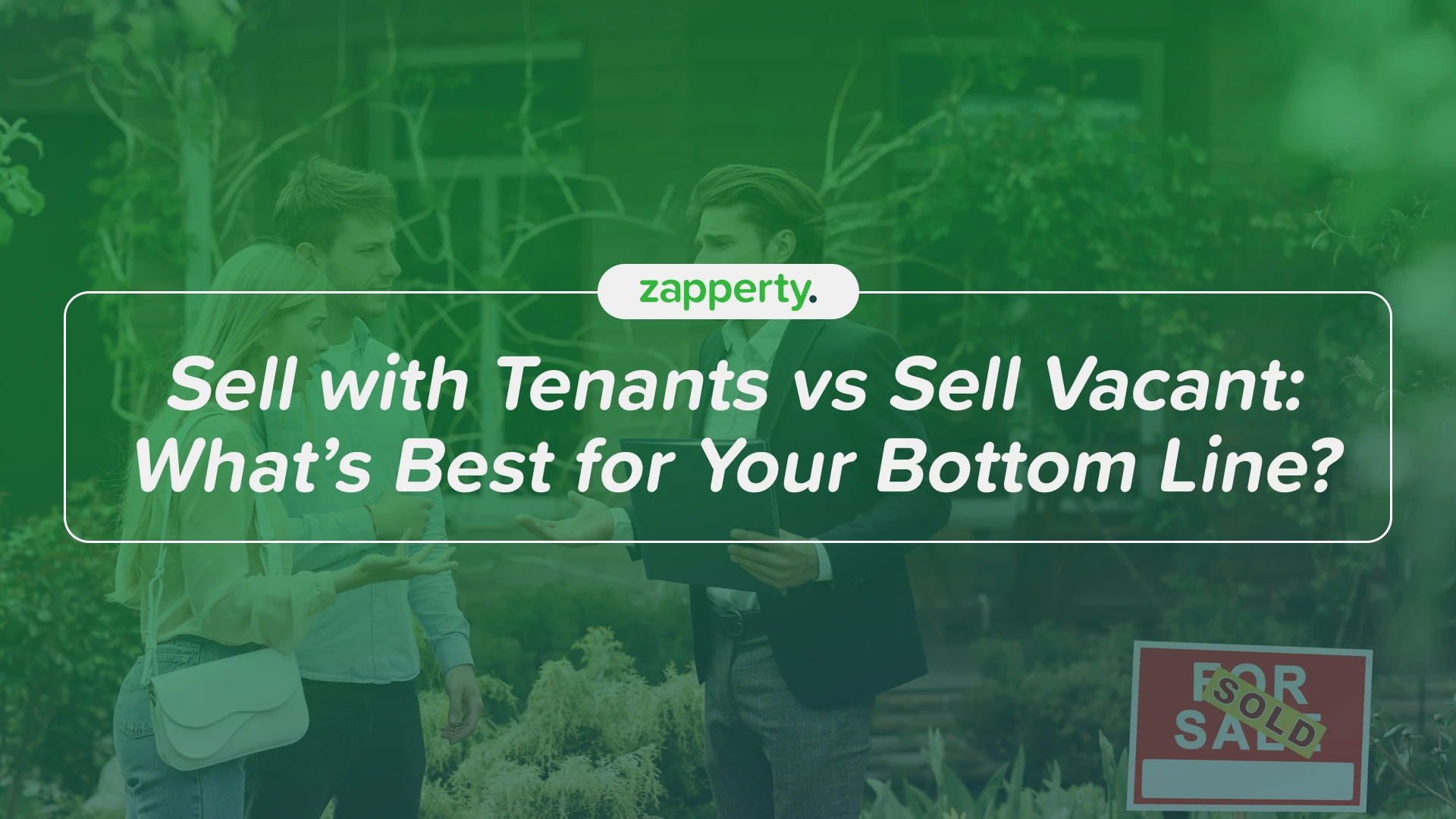
There’s no simple answer to whether it’s better to sell with tenants or vacant possession. The right route depends on your goals and what means the most to you in your current situation: speed, price or convenience. One thing for sure is that clear communication with your tenants is key as how they play ball can be a major factor.
Key takeaways:
- Selling with tenants ensures rental income continuity but may attract a smaller buyer pool and lower sale prices due to investor yield targets.
- Selling vacant attracts more buyers and potentially higher offers, but involves costs like void periods and property prep.
- Zapperty offers a streamlined selling process for both tenanted and vacant properties, guaranteeing quick completion and eliminating common selling headaches.
Selling a rental property is one of the biggest decisions you can make as a landlord. Whether you keep tenants in place or sell empty, the choice will directly impact your bottom line.
Whatever your circumstances, Zapperty can help. We buy properties both tenanted and vacant, completing in as little as 7 to 14 days with no estate agent or solicitor fees. Get a free cash offer today and see how easy selling your buy-to-let can be.